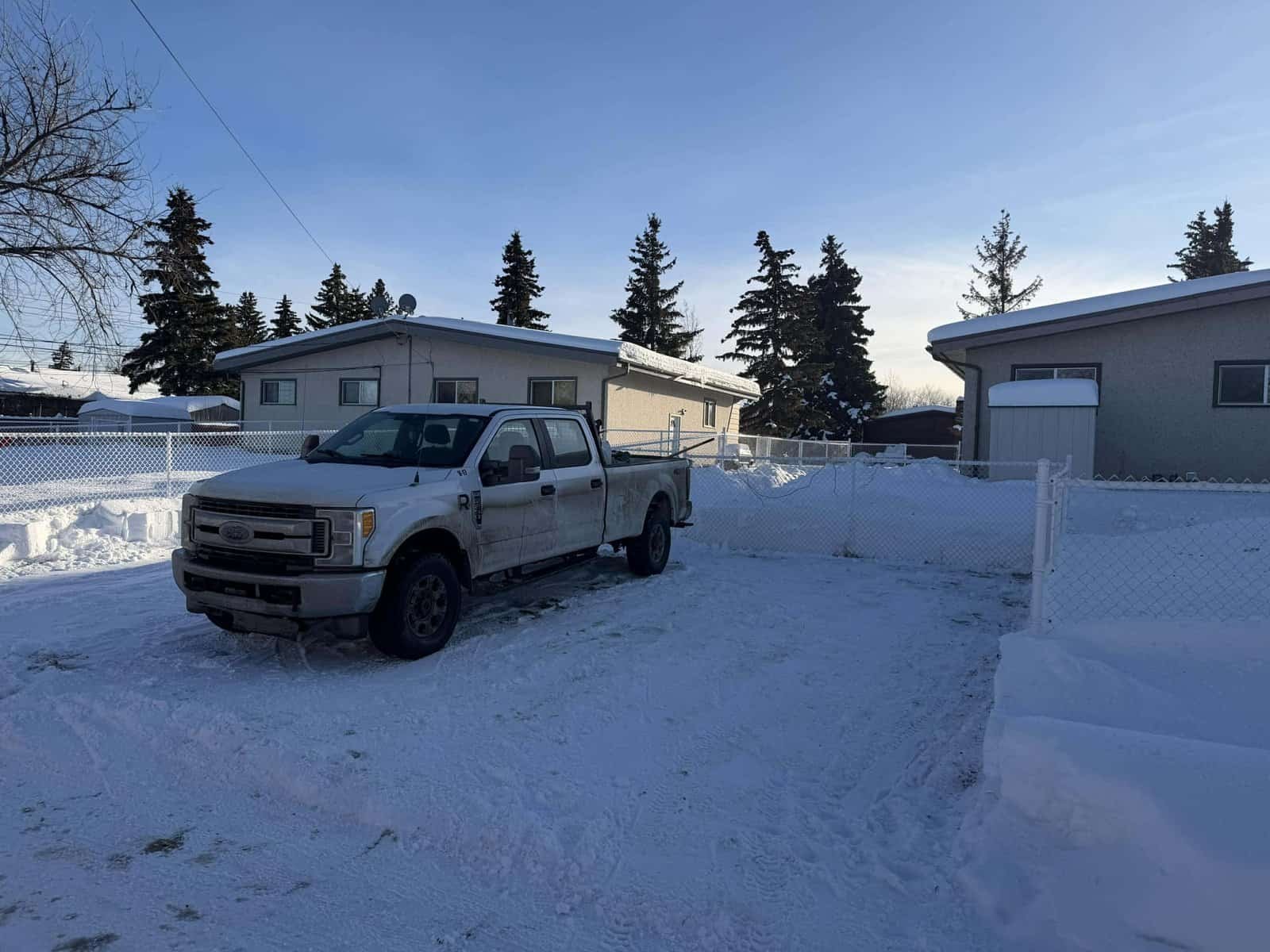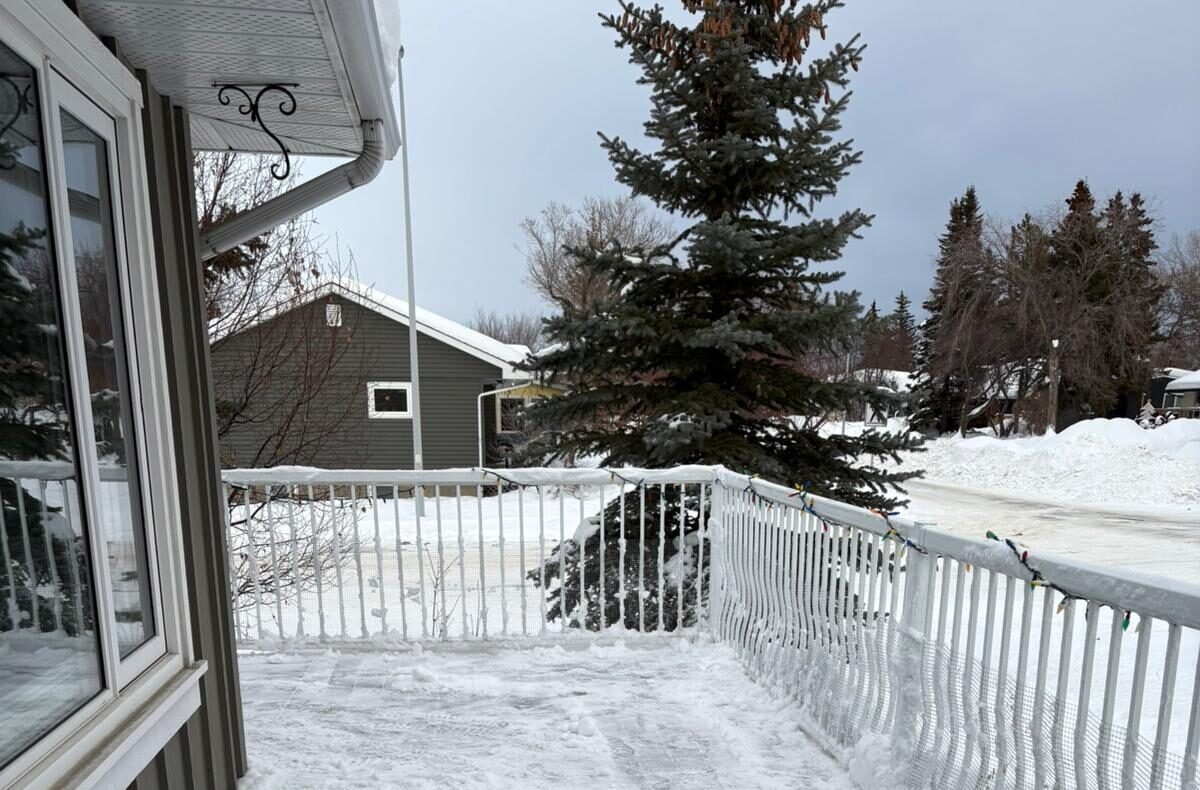

Every year around mid-April, the snow finally gives up — and Grande Prairie homeowners walk outside to a yard that looks like a disaster scene. Matted yellow thatch. Plow gravel pushed three feet deep into the lawn. Branches, road salt crust, and in a lot of cases, greyish-pink circles of snow mold eating the grass underneath.
If you’ve lived here more than one winter, you know the feeling. The question most people get wrong is what to do next.
The Fastest Way to Kill Your Lawn Is to Ignore April
Northern Alberta winters do specific, predictable damage to turf. Understanding what’s happening under your dead thatch is the difference between a lawn that bounces back in May and one that struggles all summer.
Here’s what’s actually going on in your yard right now:
- Thatch suffocation. The dead grass layer from last fall, combined with snow mold and compaction, forms a mat that blocks sunlight, water, and air from reaching the soil. Grass can’t breathe.
- Gravel invasion. City plows pushed sand, gravel, and road salt into the edge of your lawn all winter. If you mow over it in June, it shreds your blades and shoots rocks at your siding.
- Snow mold fungus. Those pink-grey circles you’re seeing? That’s Microdochium nivale — a cold-weather fungus that grows under the snowpack and kills grass roots. Light raking won’t touch it.
- Deep soil compaction. Heavy snow loads all winter press your soil down into concrete. Roots can’t push through. Water runs off instead of soaking in.
Why a Rake and a Garbage Bag Aren’t Enough
Let’s be honest — most homeowners can handle picking up sticks and hauling out a few bags of leaves. That’s not spring cleanup. That’s yard tidying.
A real spring cleanup in Grande Prairie requires commercial-grade equipment to do the heavy work:
Mechanical Power Raking
Our BlueBird power rakes are walk-behind units with steel flails that physically rip the dead thatch layer out of your turf. A consumer leaf rake can’t touch what these machines pull up. On most residential lots, we haul away 4–8 bags of dead organic material per property — the stuff that was suffocating your lawn.
Core Aeration
Commercial core aerators pull 2–3 inch plugs out of your compacted soil, letting air, water, and fertilizer finally reach the root zone. This is the single most impactful thing you can do to relieve the damage from snow load.
Professional Debris Haul-Away
We don’t pile your thatch in the back alley. Every cleanup includes full haul-away to the appropriate disposal facility. Residential and commercial.
When Exactly Should You Book?
The timing window in the Peace Country is shorter than most people think. You want your cleanup done after the ground has firmed up but before the first real growth push — typically the last week of April through mid-May in Grande Prairie.
Go too early, when the soil is still sopping, and heavy equipment compacts your yard instead of helping it. Go too late, after the grass is already growing, and you’re fighting against your own turf every step of the way.
This is why our spring routes fill fast — there’s a 3-week window where the work actually matters, and we cap how many properties we take so every lot gets the right treatment at the right time.
What Drew’s Seasonal Services Does Differently
We built our spring program around four tiers so you can match the service to the damage on your specific property:
- Tier 1 — Spring Cleanup ($299). Debris and branch removal, first cut, hard surface blowout. The baseline reset for lawns that came through winter relatively clean.
- Tier 2 — Power Rake ($349). Mechanical thatch removal and haul-away. The most common service for established GP lawns.
- Tier 3 — Full Renovation ($649). Power rake + core aeration + overseeding + spring fertilizer. The “fix the winter damage” package for lawns with bare patches or snow mold.
- Tier 4 — Platinum Revival ($999). Everything above, plus full driveway, walkway, and patio pressure washing. The total property reset.
Every tier is flat-rate for most residential lots. No surprise invoices. No scope creep. And every job gets done by our own crew on our own equipment — no subcontracting.
When should I book spring cleanup in Grande Prairie?
Book now. Services run from late April through mid-May in GP, and spots fill on a first-come basis because we cap our routes. You don’t need to wait until the snow is fully gone — we’ll schedule your visit for when the ground is ready.
Do I need a power rake every year?
Most established GP lawns benefit from power raking every 1–2 years. If your lawn has visible snow mold, thick thatch, or has been neglected for several years, plan on annual power raking until the turf recovers.
Is spring cleanup worth it for commercial properties?
Absolutely. Winter gravel in commercial lots and boulevards is a liability risk and a curb-appeal killer. We offer dedicated commercial spring programs with before-hours scheduling.