
If you have looked at a snow contract, you have probably seen a line like “5 cm trigger.” It sounds simple, and mostly it is, but it is also the line that causes the most confusion once winter starts. Here is what a snow removal trigger in Grande Prairie actually means, how it plays out in real weather, and what you should ask before you sign anything.
What a trigger is
A trigger is the amount of new snow that has to fall before the crew comes out. With a 5 cm trigger, once roughly 5 cm of snow has built up, your property goes on the list. Under that, the contractor is not expected to come.
Why have a trigger at all? Because sending equipment out for a dusting does not make sense for anyone. It takes the same time to drive to your house for a light skiff as it does for a real snowfall. The trigger is where both sides agree the snow is worth clearing.
Five centimetres is about two inches. That is roughly the point where a driveway starts to get slick and where snow gets packed into ice if you drive on it. That is why it is a common number for homes.
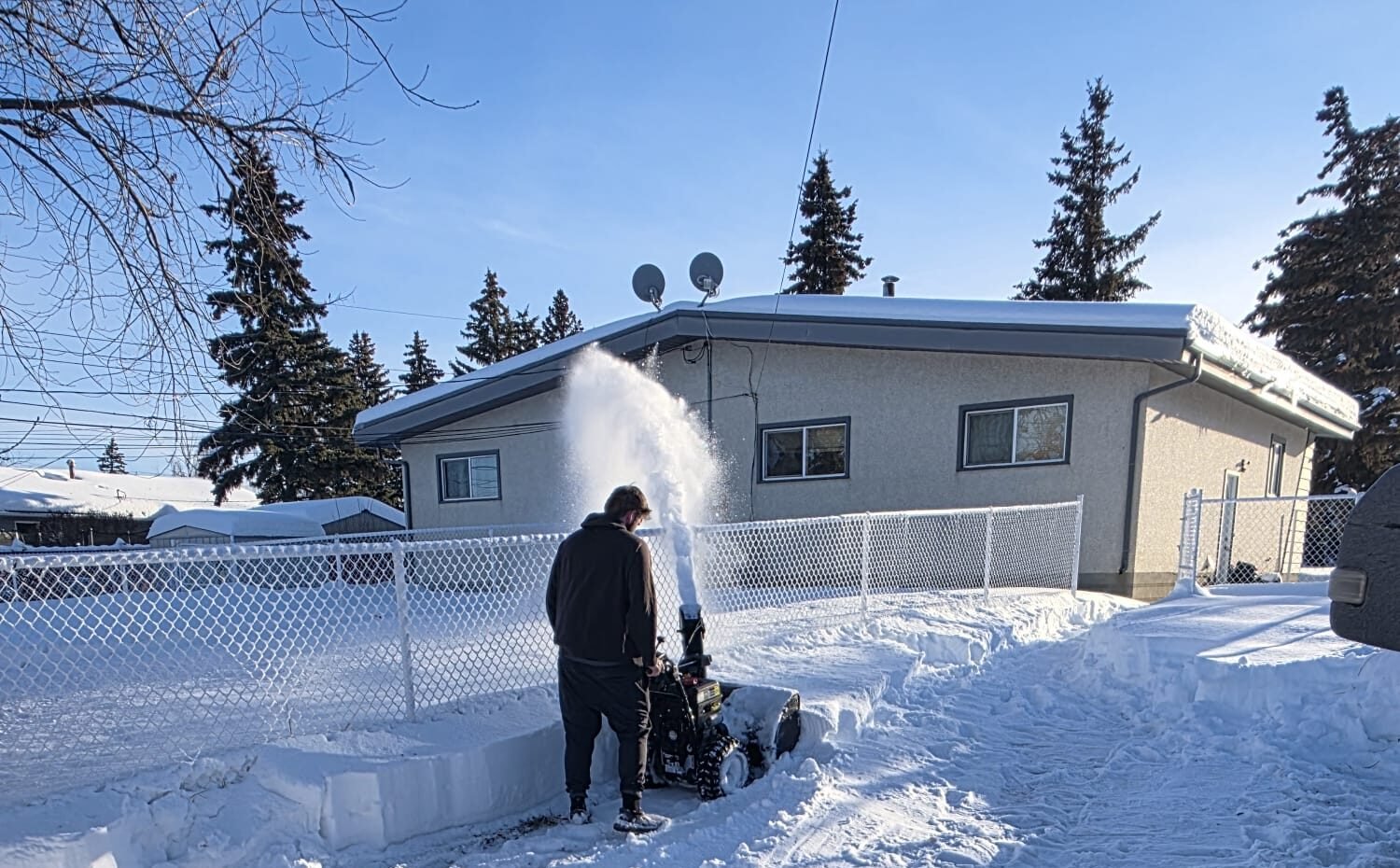
How a snow removal trigger works in Grande Prairie winters
Most contracts measure the trigger by snowfall, not by what is sitting on your particular driveway. Contractors usually go by general snowfall in the area and what they see on the ground on their route. That matters, because snow does not fall evenly across the city, and wind moves it around.
Timing matters too. Snow often keeps falling through the night. A good contractor waits until the bulk of it has come down, then clears, so you are not left with a fresh layer an hour after they leave. In our case we aim to have residential driveways done by 6 AM so people can get to work.
Small snowfalls and drifting
When small snowfalls add up
This is the part people do not always think about. Say it snows 2 cm Monday, 2 cm Tuesday and 2 cm Wednesday. No single day hit 5 cm, but you now have 6 cm on the driveway, and some of it is packed down from the car.
Contracts handle this in different ways:
- Some count each snowfall on its own, so small ones never trigger a visit.
- Some add up the snow since the last clearing and come out once the total passes the trigger.
- Some leave it to the contractor’s judgment.
None of these is wrong, but you want to know which one you are getting. If small snowfalls never count, plan on doing a quick shovel yourself now and then so it does not turn to ice.
What about drifting
Wind is a big deal here. A night with only a little new snow can still pile a drift across the end of your driveway, while the middle stays almost bare. Or the opposite: the official snowfall was well over 5 cm, but the wind blew your driveway nearly clean.
Ask how drifting is handled. Some contractors treat a drift that blocks the driveway as a reason to come out even when snowfall was under the trigger. Others will only come on a true snowfall event. Knowing this ahead of time saves a frustrating phone call on a windy morning.
The city plow windrow
The ridge of snow the city plow leaves across the end of your driveway is another common question. It can show up hours after your driveway was cleared. Ask whether a return trip for that ridge is included, or whether it gets cleared on the next regular visit.
Questions to ask before you sign
- What is the trigger, and is it measured per snowfall or added up over several days?
- What gets cleared at each visit? Driveway only, or the front walk and steps too?
- Is sand or ice melt included, and when is it put down?
- How is drifting handled when snowfall is under the trigger?
- What happens with the city plow windrow?
- What time can I expect to be cleared out by?
- Can I call for an extra clear if I need it, and how is that handled?
- Where will the snow be piled on my property?
A contractor who answers these clearly before the season is one who will be easier to deal with in January.
Is a 5 cm trigger right for you
For most homes, yes. It catches the snowfalls that make a driveway unsafe without paying for visits you do not need. If you have mobility concerns, a steep driveway, or you leave very early for work, you might want to ask about a lower trigger or priority service. If you like to shovel and only want help with the big dumps, a one time call might suit you better than a contract.
How we handle it
Our residential snow removal uses a 5 cm trigger with a 6 AM goal. Our plans range from driveway clearing on its own up to driveway, front walks and steps with sand and ice melt, and priority response is available on the higher plans. If you want to talk through how a trigger would work on your property, get in touch for a quote or call Drew at 587 818 5838.


